Korouoma Canyon Weather by Month
Korouoma Canyon weather from January to December: typical highs and lows near Posio, snow and ice, thaw, daylight, mosquitoes and what each month does to the trail.
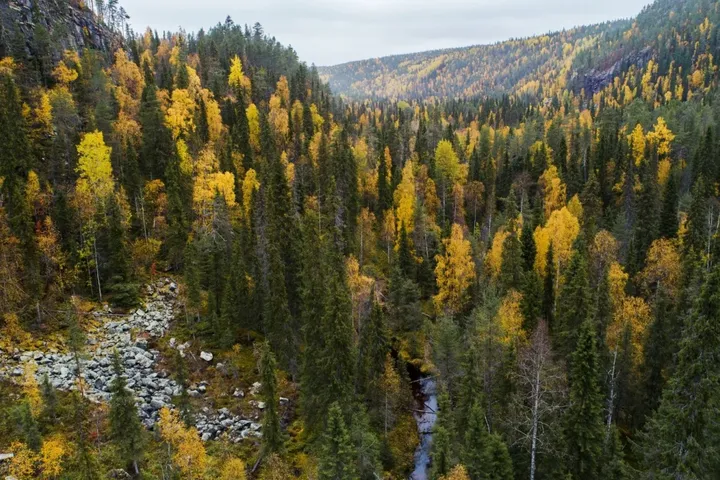
Korouoma swings from deep Arctic winter to a long, light northern summer, with two messy changeover seasons in between. On the Koronjää trail, the numbers on a thermometer matter less than snow depth, wind, rain, a recent thaw and the hours of daylight you have. Use the month to pick the season, then check the actual Posio forecast in the days before you go.
Check Availability

Korouoma Canyon & Frozen Waterfalls Tour with BBQ
- 4.9/5 (343 reviews)
- 7 hours
- Free cancellation
- Guide: EN
Includes Transfers in brand-new 2025 luxury 4x4 vans · Hotel pickup and drop-off · Lunch
You'll choose your date and complete the booking on Viator. Reserve now, pay later on most departures.
Korouoma Weather at a Glance
The highs and lows below are typical values for Posio, the municipality the canyon sits in. Any single week can run far colder or milder.
| Month | Typical high / low | Main character | Typical trail issue |
|---|---|---|---|
| January | −9 °C / −16 °C | Deep winter | Cold, snow, ice |
| February | −8 °C / −15 °C | Deep winter, more light | Cold, compacted snow |
| March | −3 °C / −11 °C | Late winter | Freeze-thaw beginning |
| April | 3 °C / −6 °C | Spring-winter transition | Slush and refrozen ice |
| May | 10 °C / 1 °C | Thaw | Mud, water, remaining snow |
| June | 15 °C / 7 °C | Early summer | Rain, insects beginning |
| July | 18 °C / 10 °C | Summer | Mosquitoes, wet roots |
| August | 15 °C / 8 °C | Late summer | Cooler mornings |
| September | 10 °C / 4 °C | Autumn | Rain, frost possible |
| October | 3 °C / −2 °C | Winter transition | Frost, early snow |
| November | −3 °C / −8 °C | Early winter | Snow, short daylight |
| December | −7 °C / −13 °C | Full winter | Snow, ice, darkness |
This page covers conditions on the ground. For the booking decision itself, which month suits which tour and when the frozen-waterfall departures run, see our guide to the best time for a Korouoma Canyon tour.
Winter: December to March
December
Expect full winter conditions, with snow, ice and very short days. Around the solstice Posio gets under three hours of daylight. The frozen waterfalls are usually already well formed. If you hike on your own, start early and carry a headlamp, because the light goes by mid-afternoon.
January
January is proper Arctic winter and usually the coldest month, with typical lows around −16 °C. Expect deep snow, frozen waterfalls and short days. Severe cold spells happen, so this is one of the months when your clothing matters most.
Traction aids help on compacted snow and the icy descents into the canyon.
February
February is still full winter, with noticeably more daylight than January. Conditions range from fairly mild winter days to hard cold spells, so the current forecast tells you far more than the monthly average.
March
March pairs deep snow with much longer days, which makes it a strong month for photography. The gap between day and night temperatures grows: snow that is hard underfoot in the morning can soften in afternoon sun.
For most winter visitors without a car, the Korouoma Canyon & Frozen Waterfalls Tour with BBQ runs from Rovaniemi while the falls are frozen. It costs from $94, is rated 4.9/5 from 343 reviews on Viator and lends thermal overalls, which matters most in January and February.
Other Experiences
Other experiences you might enjoy
More ways to explore Korouoma Canyon and Lapland — all bookable with free cancellation.


Spring Thaw: April and May
April
April is a changeover month. Early on the canyon can still look fully wintry; by late April the trail turns wet and soft.
Expect freeze-thaw cycles, dripping ice, hard surfaces in the morning and slush later in the day. Warm spells also loosen ice on the cliffs, so keep well back from the base of every ice fall: blocks and stones can drop without any climber above them.
May
Spring melt takes over. Leftover snow, meltwater and mud make the trail awkward, and the larger ice falls can still be shrinking on the cliffs. Metsähallitus notes that the last ice on Ruskea virta usually disappears around May or June.
In May you get neither classic winter scenery nor easy, dry summer hiking, which makes it the least predictable month to plan around.
Summer: June to August
June
June brings very long days (around midsummer Posio gets close to 24 hours of light), green forest and usually snow-free hiking. It can still be cool and wet, so carry warm layers and waterproofs.
Without a car, the Korouoma Canyon Hike and Barbecue Experience is the guided snow-free option from Rovaniemi, from $153 and rated 4.9/5 from 92 reviews on Viator.
July
July is usually the warmest month, with typical highs around 18 °C. Heatwaves are possible even in northern Finland, but so are rain and cool days, and July is also the wettest month on average.
Mosquitoes can be the biggest practical nuisance, worst on warm, still days. Our Korouoma summer guide covers the trails and insects in more detail.
August
Early August still feels like summer; by late August the mornings turn cool and the season feels autumnal. Dark nights return, and with them the first chance of combining a hike with a look for the northern lights on a clear night.
Autumn: September to November
September
September brings cool weather, autumn colour and a growing chance of frost. Early snowfall is possible in northern Finland, though snow rarely stays this early.
October
October is one of the least predictable months. You may meet rain, frost, early snow or all three in a single week.
Plan October for neither summer nor full winter. Pack for both.
November
Winter settles in. Snow and ice become normal and the ice on the cliffs starts building. In a year with early frost, climbers can be on Ruskea virta by October or November, but the falls most visitors come to see are more reliable from December and at their fullest from January.
The main challenge is short daylight: by late November you have only a few hours of usable light for the hike.
Which Month Is Coldest?
January into early February is usually the coldest stretch, though hard cold can arrive at any point between December and March.
Which Month Has the Deepest Snow?
Snow in Lapland usually lies deepest in March or early April. January is not the deepest month. The Finnish Meteorological Institute’s end-of-March summaries for recent winters put snow depth across most of Lapland at roughly 30–80 cm.
Which Month Is Warmest?
July is usually the warmest month of the year near Posio.
What Forecast Should Make You Reconsider?
Think carefully before going if the forecast shows:
- severe weather warnings;
- extreme cold beyond what your clothing can handle;
- very poor road visibility for the drive from Rovaniemi;
- strong wind;
- conditions your group cannot safely handle.
Ordinary snowfall or cloud does not ruin a day at Korouoma.
Weather and Photography
Fresh snow makes beautiful forest scenes. Overcast light shows the texture of the ice well. Sunshine gives strong shadows and sparkling snow, and mist or falling snow can make atmospheric canyon photographs.
No single forecast suits every picture.
Packing by Season
December–March: thermal layers, insulated boots, winter outerwear and traction aids. Our temperature-by-temperature clothing guide goes into each layer.
April–May: warm layers, waterproofs, waterproof boots and possibly traction aids.
June–August: hiking clothes, a fleece, a waterproof jacket and insect protection.
September–November: warm layers, waterproofs and footwear that copes with frost or snow.
Frequently Asked Questions
Can it get below −20 °C at Korouoma?
Yes. In January 2026 the average temperature for the whole month was just over −20 °C in parts of Lapland, according to the Finnish Meteorological Institute, and single nights in a cold spell go lower still.
Is there snow in April?
Often, especially early in the month.
Can it snow in September?
Yes. Early snow is possible in northern Finland in September, though it rarely stays.
Can July be hot?
Yes, although cool, wet days are still possible.
When do the waterfalls freeze?
Ice starts forming in late autumn, and in an early-frost year climbers can start on Ruskea virta in October or November. For sightseeing, the falls are usually well formed from December and most reliable from January to March. Our frozen waterfalls guide covers each fall.
Where should I check the forecast?
Use the Finnish Meteorological Institute forecast for Posio, and check Metsähallitus’s Luontoon.fi Korouoma page for trail notices.
Using the Forecast
Don’t choose clothing or make safety decisions from a monthly average, because Korouoma’s weather swings a lot within a single month. Use the seasonal pattern to pick your month, then decide on the day from the short-range forecast and current trail information.
Sources and Practical References
- Visit Finland
- Posio Lapland — Korouoma Canyon
- Metsähallitus / Luontoon.fi — Korouoma
- Finnish Meteorological Institute
Conditions, tour inclusions, prices, parking rules and trail notices change. Check the official sources above before travelling.
Hike Korouoma Canyon With a Local Guide
Join the guests who rate this small-group canyon hike 4.9/5. Forest trails, dramatic cliffs and a wilderness BBQ — all included. Free cancellation.
Check Availability & Book